I first met Stephen Burt some 30 years ago when he was an elementary school classmate with my son, Auran. I was exposed to his brilliance already then when he visited my laboratory at the National Institutes of Health and demonstrated a sophisticated knowledge of science. Life took him in a different direction, however, and presently he is a tenured professor of English at Harvard and considered one of the most influential poetry scholars and critics today.
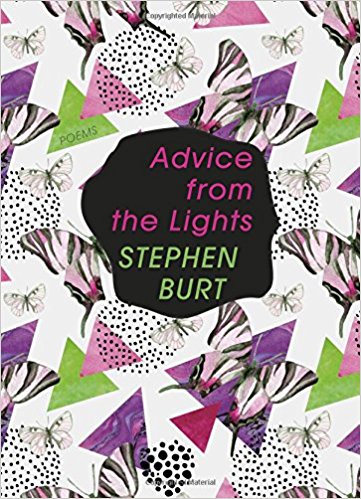 Stephen transitioned to Stephanie, an attractive and outgoing lady; recently I went to Politics and Prose to hear her read poetry from her latest book, Advice from the Lights: Poems. Stephanie candidly reveals, among other topics, her struggle for identity in her poems. Apart from the elegant expression of the internal dynamics of change from one state to another – the conflicts that lie at the heart of transitions – what struck home for me was near the end of Stephanie’s talk, when she said, “Find your people.”
“Find your people” recognized that we are all, like Stephanie, inhabited by more than one person, as it were. Somewhere within us different personalities compete for center stage, and the quest for identity involves understanding which of those people feels the most honest and comfortable in our skin. For me the silent artist has always competed with the more vocal scientist.
Stephanie writes eloquently about searching for identity.
I love poetry when I understand it. I confess, however, that many times poems make unexplained references that I need to look up (thank goodness for Google), and link ideas to images, metaphors and phrases that seem cryptic to me. But then there are those lines or short passages that sing truth, even if I’m reading them in different context than the poet meant.
In “Hermit Crab” Stephanie provides the image of living in another’s house, and ends,
…For a while I was
protected by what I pretended to be.
Often I have felt like an artist when I do science, and as a scientist when I write fiction.
And in “Scarlet, a Betta”, using a fish metaphor, the poem concludes,
I pretend each trace or trail
I make in the clarified water
amounts to my emphatic signature,
which I have chosen to leave in invisible ink.
I have felt on numerous occasions that I’ve left my signature in invisible ink, creating a conundrum of wanting recognition for work that no one can read, the conflict of competing personalities battling it out somewhere within me. So, who are my people?
Stephanie correctly recognizes her need to show that invisible ink – to expose her secret – and she writes “After Callimachus” (a noted Greek poet, critic and scholar who lived from 305-240BC),
Why do I write? Experience
And scientific evidence agree:
an otherwise intolerable load
of shame decreases by up to six percent
if told to even a temporary companion,
through a folded-up page at recess, a performance
on classical guitar, a palinode,
a tumblr, or a hash mark on a tree;
fears diminish, at least a little, whenever secrets
are no longer secrets and enter the common
atmosphere, even as birdsong, even as code.
I quote this poem in its entirety because it relates to writing, which has acted as a foil to science and the voice of a person transforming my ink from invisible to opaque.
Once again, then, who are my people, the ones reading the invisible ink, or the ones reading the opaque ink?
Stephanie suggests an answer in “A Covered Bridge in Littleton, New Hampshire,” where she writes,
The point is to be, in your own eyes, what you are.
I have found that the diverse people within me – scientist, author, art collector, husband, father and grandfather – speak with a common voice when I accept that I am simply what I am. Ricardo, the protagonist in my novel, Jellyfish Have Eyes, heard in his mind his late mother say as he reconciled the different people within him, “Being you is quite enough…because you are the person you are now and who you were and who you will become, all at once.”
In my memoir I state it differently:
As an Inuit art collector, I was a scientist. As a scientist, I was a collector. My penchant for crossing borders, blending identities, was instilled in me by my family when I was a boy, making science and writing and collecting art all fit under the same umbrella.
How, then, should I find my people? Maybe because I’m not hiding anything or anywhere, they will find me.