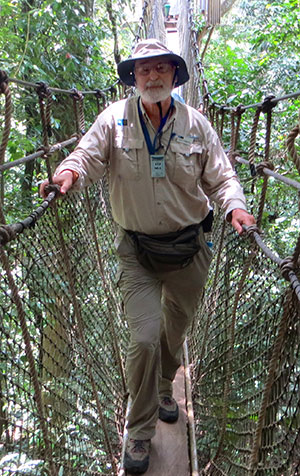
Joram Piatigorsky
Author ~ Scientist ~ Collector
Joram turned to writing following an award-winning career in science. To his surprise, the two have a lot in common. Both explore the complexities of life, and allow for hypothesis or conjecture of what is real and what is imagined.
My Story
I am many people expressed within a lifetime crisscrossing borders chasing creativity, first a research scientist for fifty years at NIH, then a novelist and essayist for some twenty years, and a collector of Inuit art along the way. I was born in upstate New York five months after my French mother of the Rothschild banking dynasty and my Russian father, a renowned cellist, along with my two-year-old sister escaped Hitler the day France and England declared war on Germany (September 3, 1939). I’m lucky that my parents saved my fetal life by courageous action. I spoke French before English, raised and educated in foreign America influenced by the European culture of my parents, and have relatives spread throughout Europe. I was the first American citizen of my now extensive family in North America. More about me can be found in this website and the recent version of my revised memoir, Imagining the Speed of Dark.
Whether it’s science or fiction or art, I seek common threads unifying diverse areas. An example of unexpected linkage within science, a common thread, is the surprising finding that many individual genes and proteins highly specialized for one function are equally specialized for entirely different functions, a counterintuitive truth of separate functions being performed by the same gene and protein. I coined the term “gene sharing” from my research, shop talk for a gene and its protein doing multiple unrelated jobs under different circumstances. This phenomenon is explored in detail in my book, Gene Sharing and Evolution.
And then there’s my writing fiction, a different world from science requiring different skills and goals. Yet, I have found that science and fiction overlap in a fundamental way. Conducting science is not limited to collecting verifiable facts, just like fiction is not limited to inventing characters and plots. The characters of science (i.e., genes, proteins, metabolites in my field) and of fiction (i.e., people, places, scenes) must be weaved into a compelling and consistent narrative that is never complete or absolute. I don’t propose that scientific narratives are literary fiction. The observations and experiments are based on reality, yet the necessary resulting narratives require speculation to link the discrete observations to fit within present knowledge, like fiction is made internally consistent based on imagination. Extending the common thread of imagination and reality, I developed the idea in my novels that observations and experiences are inevitably influenced by imagination, leading to diverse interpretations and sense of “reality” of the same situation by different individuals.
As for art: well, art is famously known for crossing imagination and personal expression, as I have found to be the case collecting Inuit art (www.inuitbeautiful.com).
So, who am I? A scientist who imagines and writes truth and fiction, all with the heart of an artist, seeking common threads crossing borders to unify diverse phenomena and areas.